
The Sum of All Views
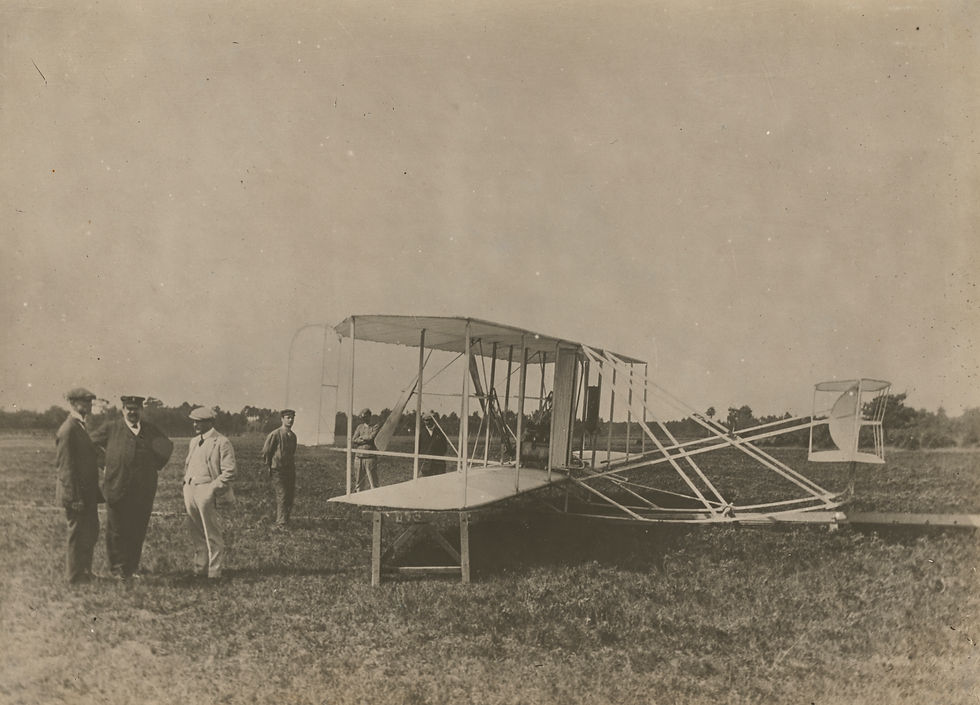
We recently visited the Wright Brothers National Memorial at Kitty Hawk, North Carolina, on a very windy day. The memorial sits on the spot where Orville and Wilbur Wright made their first flights, and the wind we felt that day was much like the wind they had flown against all those years ago.
The museum tells two connected stories about that historic event. First, it celebrates the achievement: the Wright brothers were the first to achieve controlled, powered flight. Second, it shows you the work behind that accomplishment – the four problems they had to solve to fly against that wind: lift, control, power, and materials. It explains how much data the brothers gathered about each one, and how that data guided every engineering decision they made.
Both stories are true, and you need both to understand what the brothers actually did. It is the two together – the triumph and the engineering behind it – that support the claim that the brothers were the first to fly. The celebration tells you why the flight mattered, but not how it was done. The engineering tells you how it was done, but not why it was such a triumph. Study only one view and you miss the invention.
I see the same split every day, in my clients’ inventions. There are two main types of invention disclosure documents that I receive from clients – those written by the CEO and those written by the CTO.
The CEO documents veer toward celebration. They are usually slick slide decks describing the new product, its costs, and the market it is designed for, with user-oriented drawings showing what the product does for the user. This is the vision: in the Wright brothers’ case, that they were the first to achieve controlled, powered flight.
The CTO documents are the engineering. They are technical specs, full of parts, their sizes, and their connections, with drawings specific to the first version of the product. This is the “how”: in the Wright brothers’ case, these documents show how they solved the four problems of lift, control, power, and materials; to achieve the controlled, powered flight.
As in the museum, neither version alone shows the full invention. Both are necessary for us to understand and appreciate the invention fully.
So, where is the invention? (i.e. what can we claim?)
Sometimes it is in the overall product – the vision itself. For the Wright brothers, the very idea of a powered flying machine that was controlled was the breakthrough. This type of invention is closer to the CEO’s vision. But a vision is not enough. We need the CTO to provide a sufficient implementation of it, even a very brute-force one. A dream of flight that never leaves the ground is not yet a patentable invention.
Sometimes the invention is in the clever tricks that the engineers came up with to improve the product. Everyone wanted to fly. The brothers’ real edge was control – steering the craft in the air and, hardest of all, bringing it back down safely – the very problem that had defeated prior attempts. This type of invention is more of a CTO invention. Still, to appreciate it, we need the CEO’s sales pitch to help us wade through all the manufacturing details and focus on the implementation details that relate specifically to the product’s inventive element.
Then there are the times when we use the marketing department’s description of the product features to help us see why the small tweaks are so important – the way the museum points to the one detail, among the many, that made all the difference.
All these views – vision, implementation, and features – help us patent attorneys and, more importantly, the various readers of the patent (which include, among others, the examiners, investors, and judges) form a sense of the invention’s brilliance and achievability. They are like the visitors to the museum. Without the vision, we have no idea what the brilliance is, nor what it can lead to. Without the features, we have no sense of its improvement over the “prior art” – over the attempts that came before. And without the implementation, we have no sense of how to achieve the brilliance ourselves.
The lesson for patent work is simple: no single company voice can fully define an invention; the strongest disclosures combine the CEO’s vision, the CTO’s implementation, and the product team’s feature-level proof of differentiation.
This is why, when I meet with clients, I will often ask the business folks how to build the invention, which leads to their comment, “I will connect you with the engineers.” And when I meet with the engineers, I will discuss the broader uses of their invention, and they will say, “Discuss it with the CEO.” We need multiple types of input, which usually requires multiple meetings, or at least documents from multiple people.
Patent applications are interdisciplinary documents, spanning the business and technical sides of a company and never quite sitting on either one. As a result, some of our client contacts are the company founders, their CEOs, or their business managers. Others are the CTOs or the technical heads of the company.
This is also why it is hard for a generative AI to create a proper patent application. The AI is never talking to the right person. LLMs, at least today, don’t have the power to say “let me speak to your associate”. As a result, the person working with the AI does not have, or doesn’t realize that s/he has to provide, all the information necessary for the patent application. Like a visitor who hears only the celebration, the AI can tell you that the brothers flew – but not how they solved the four problems to get there.


Comments